

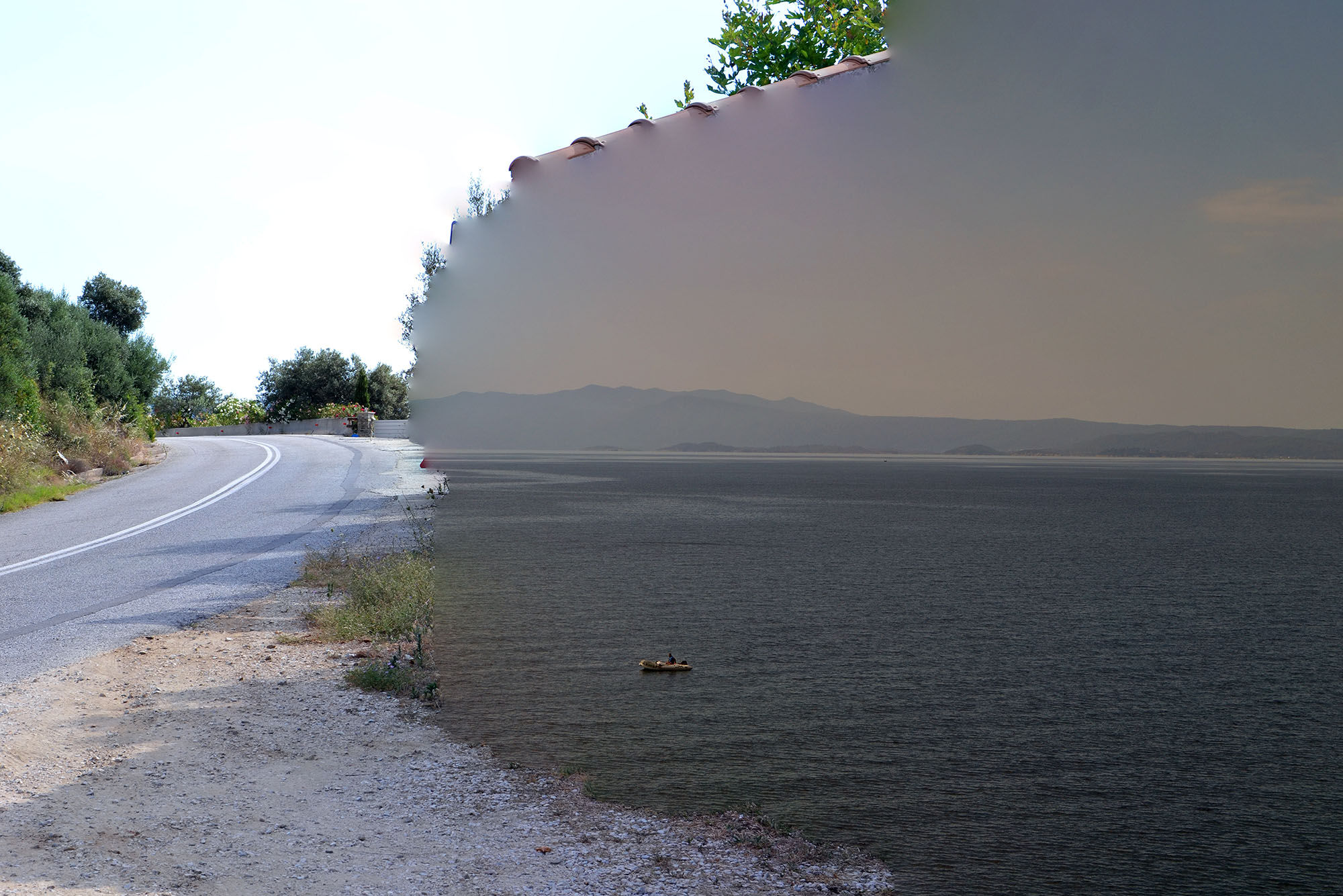
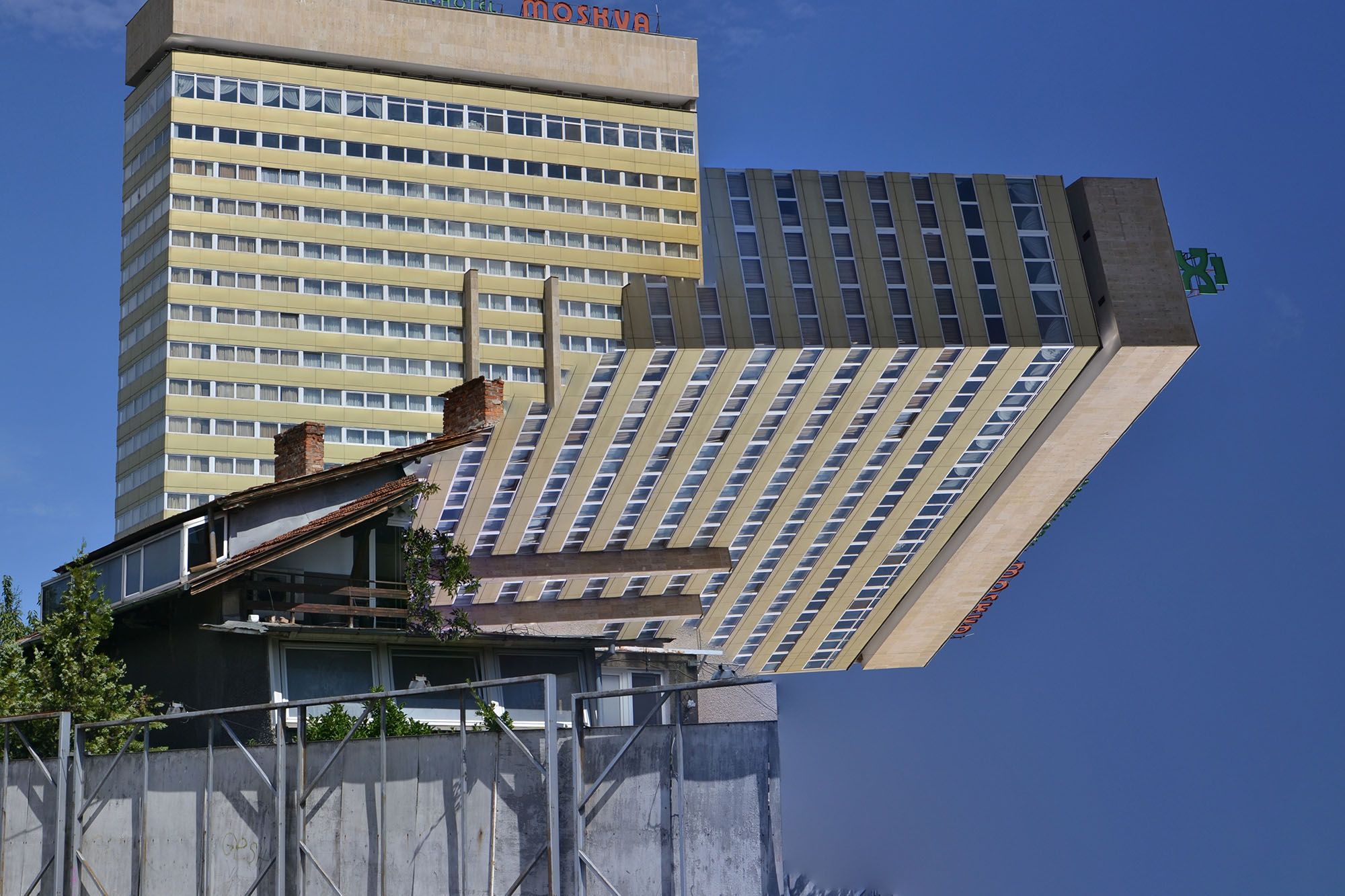
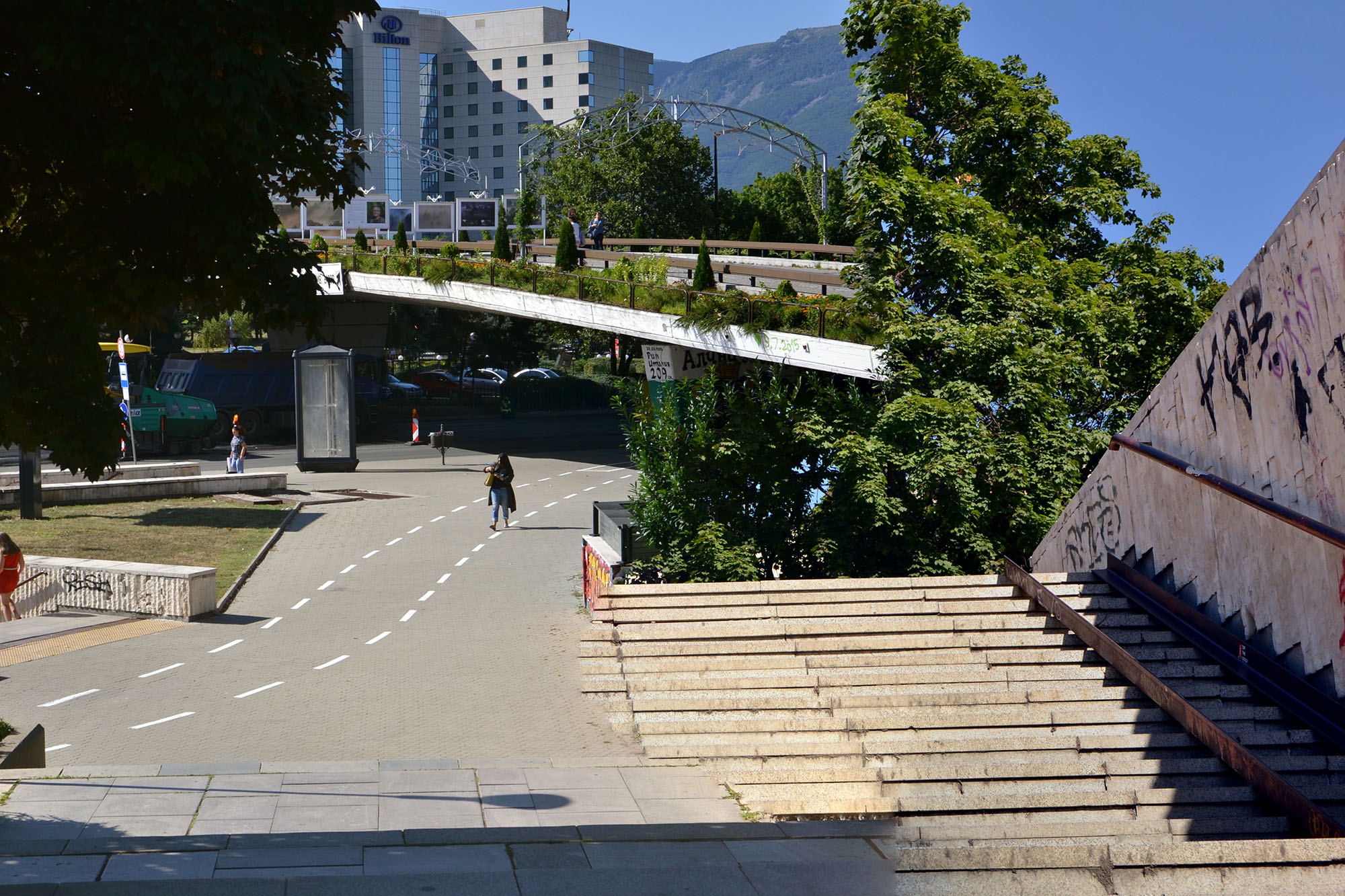

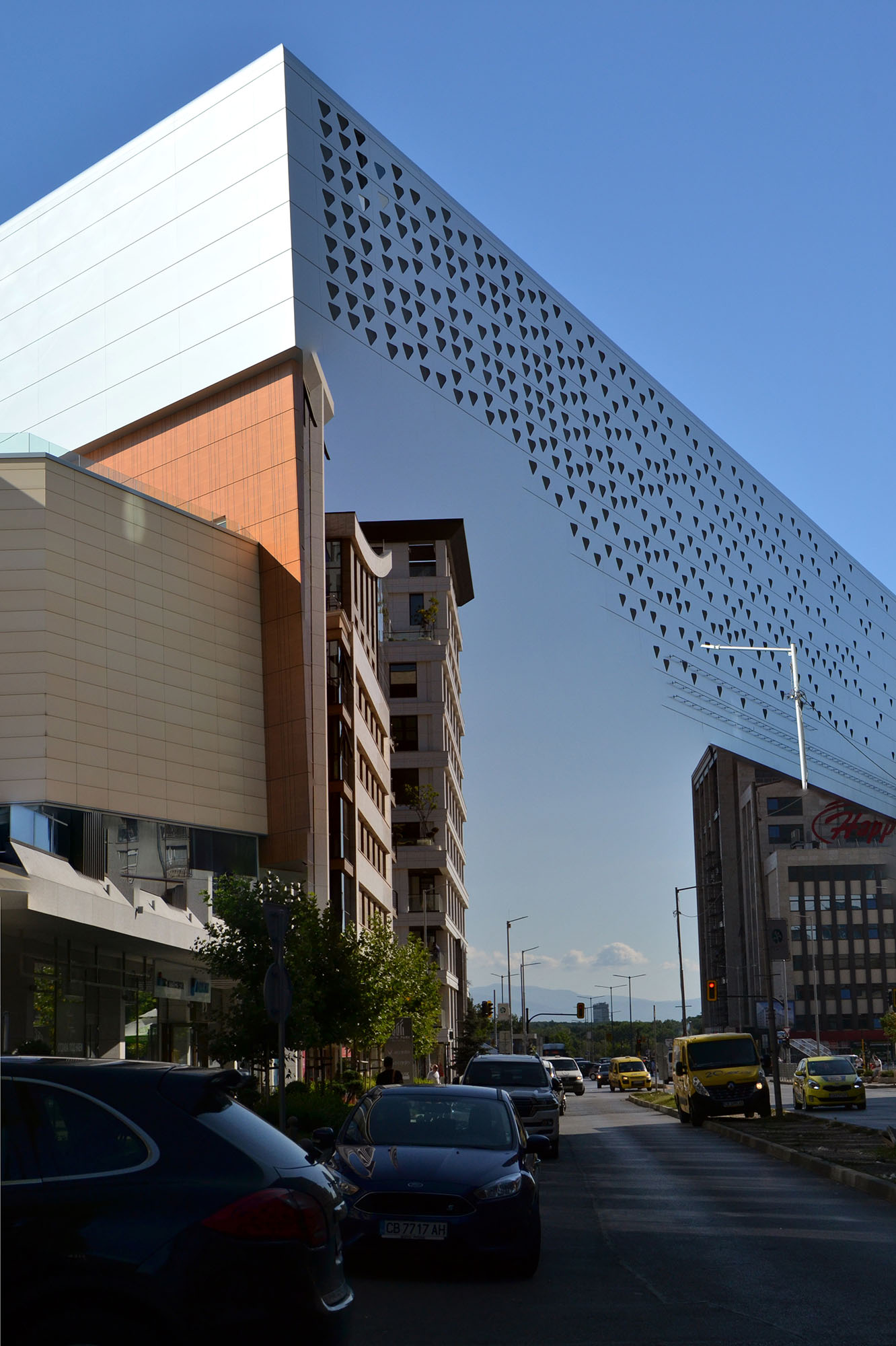


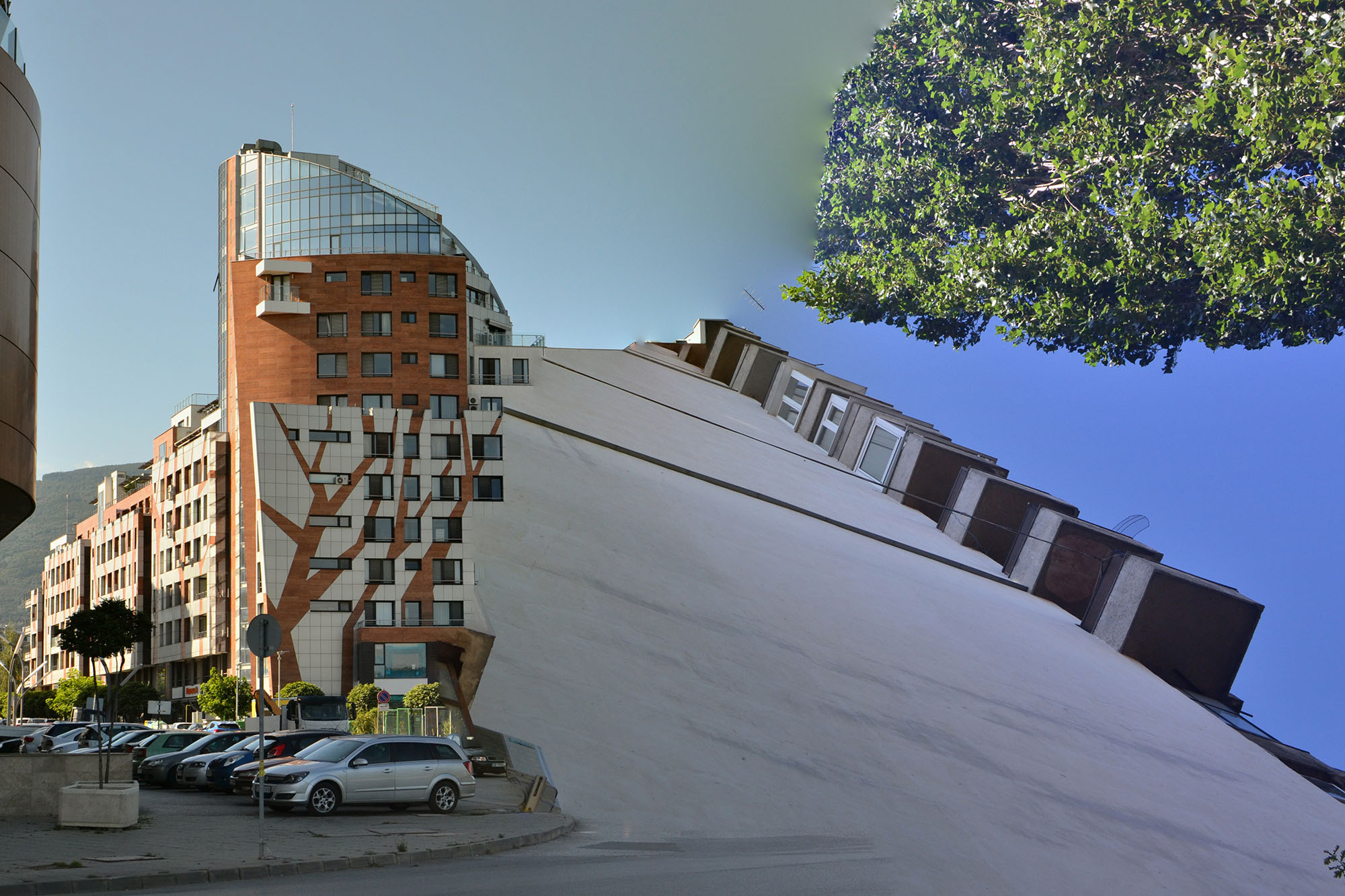
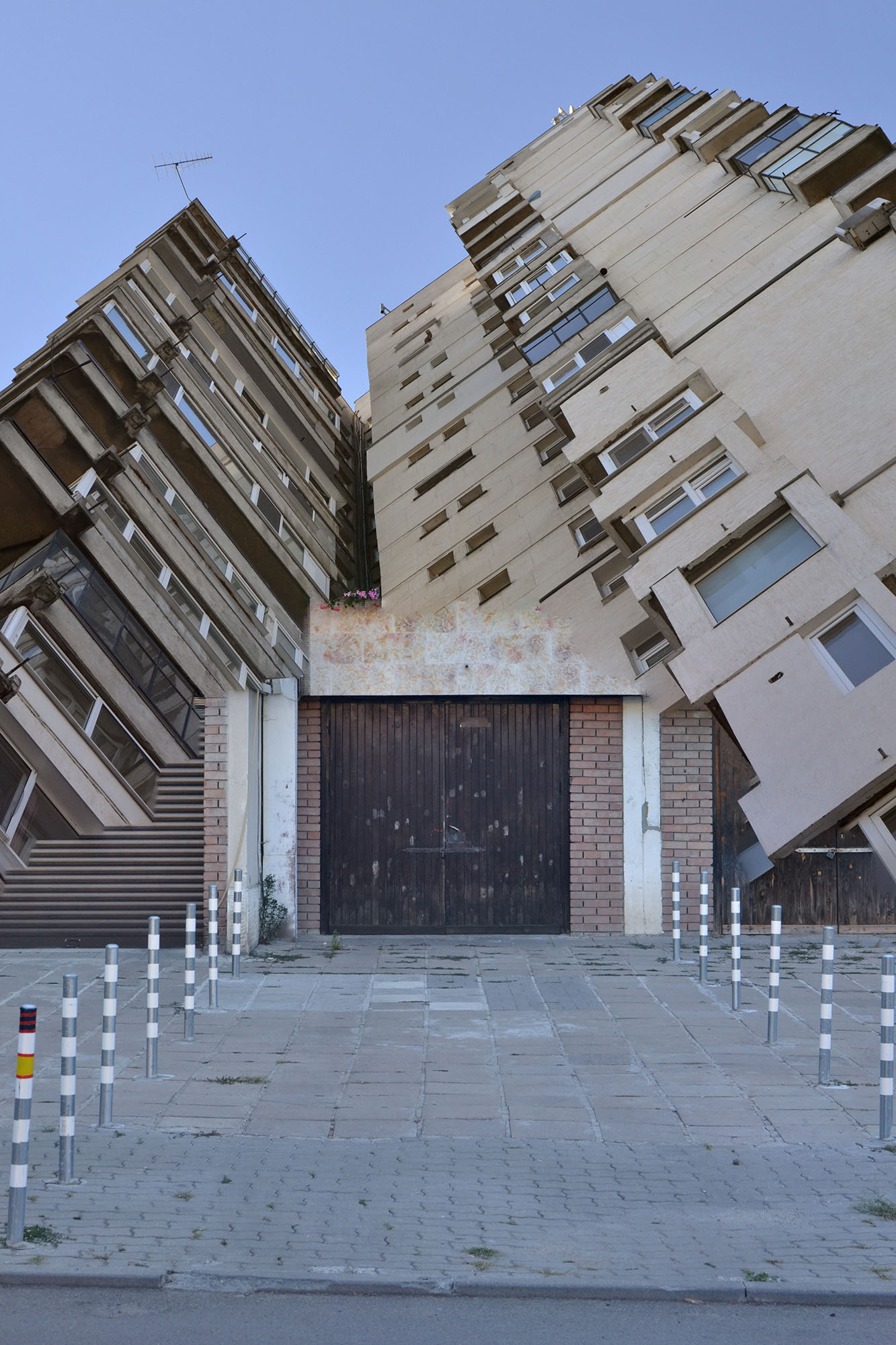
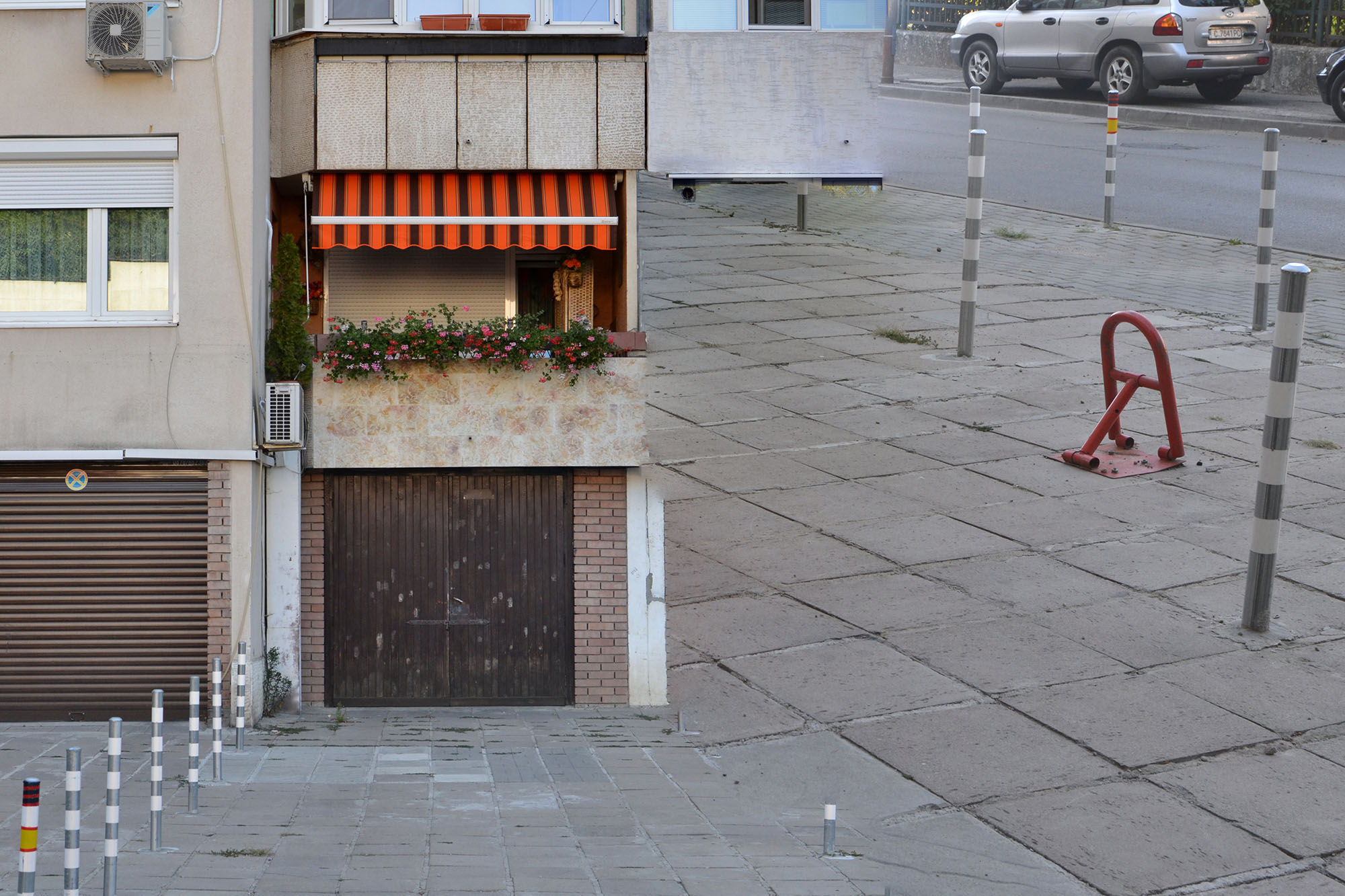
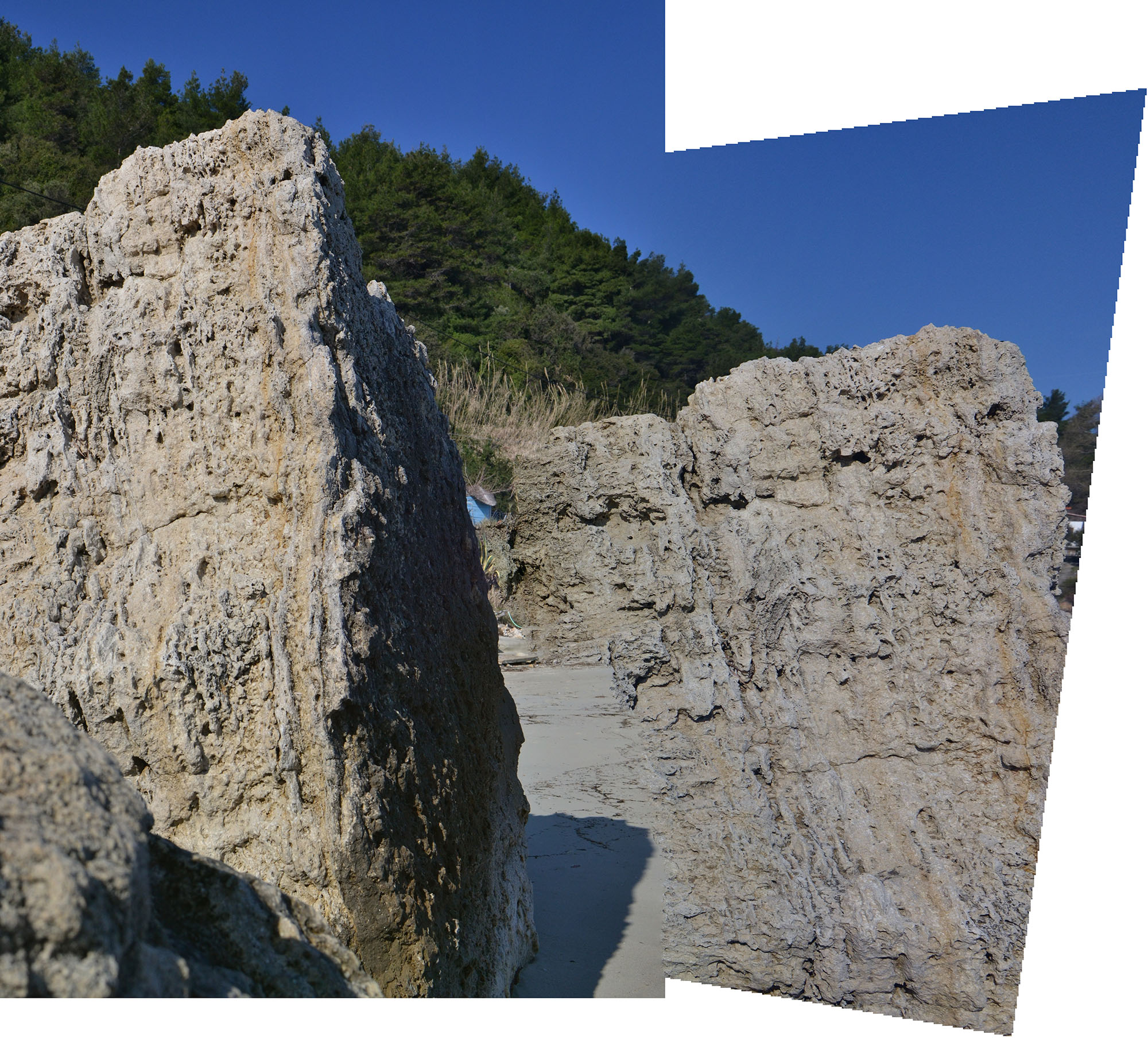

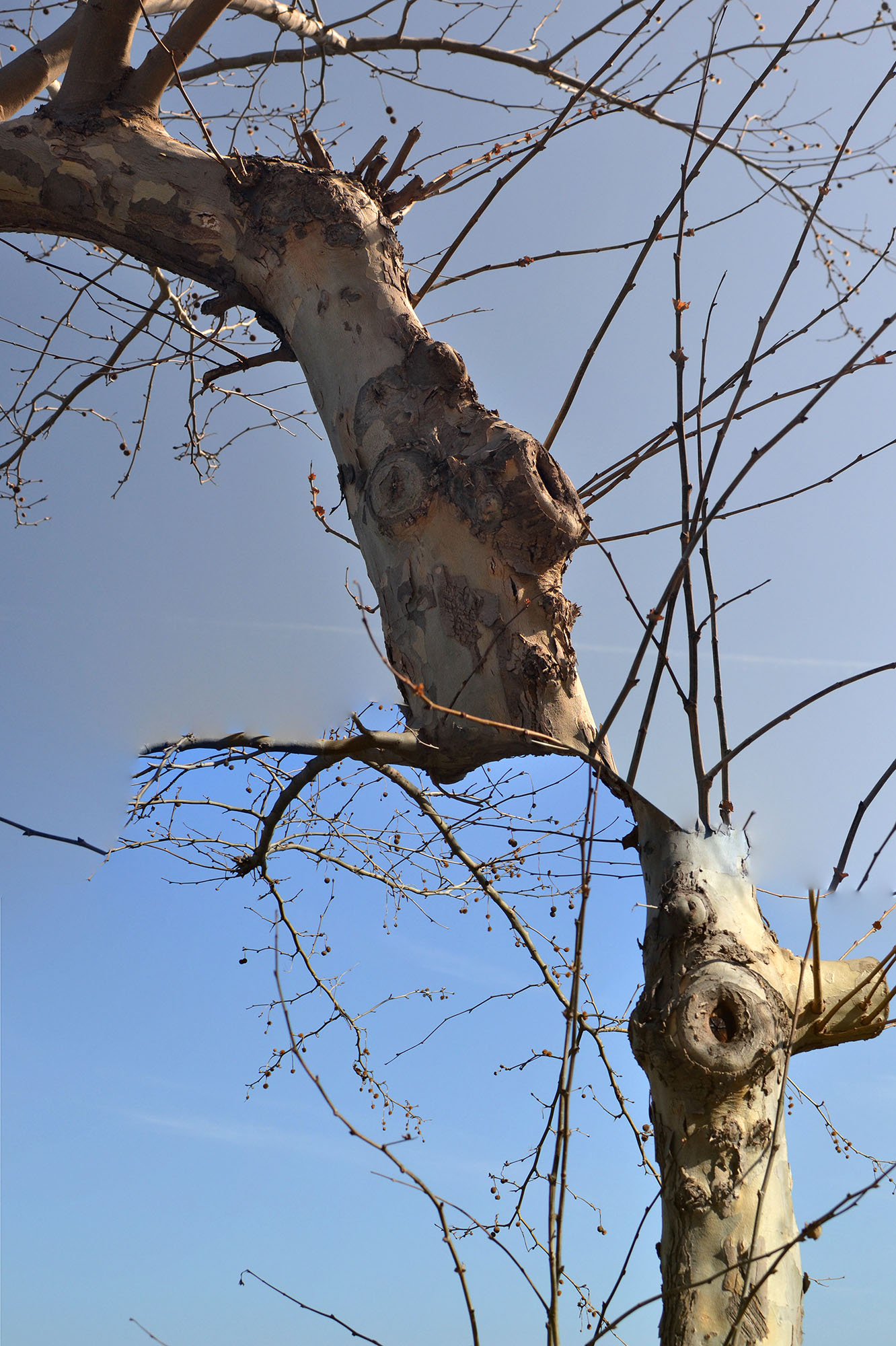
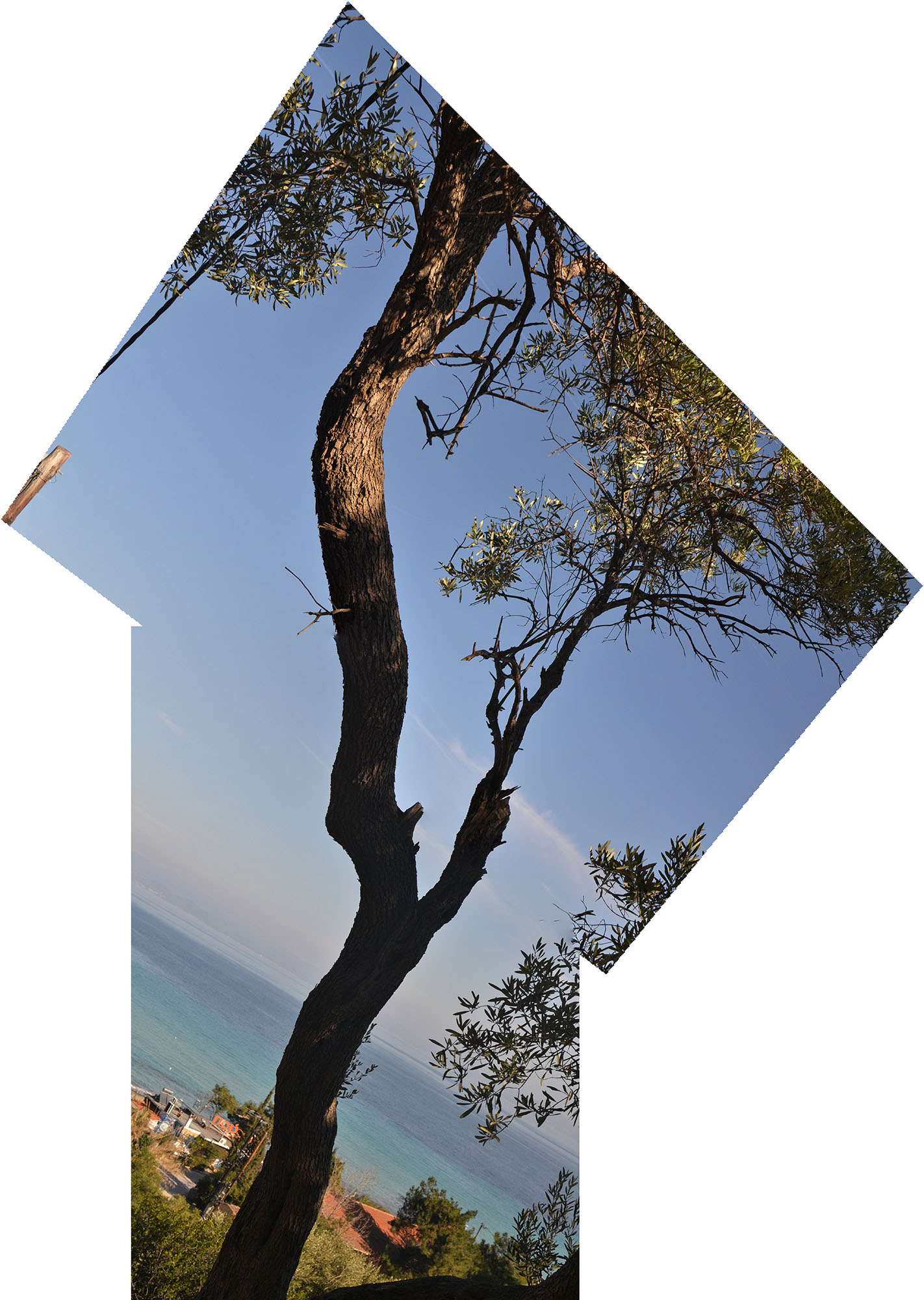
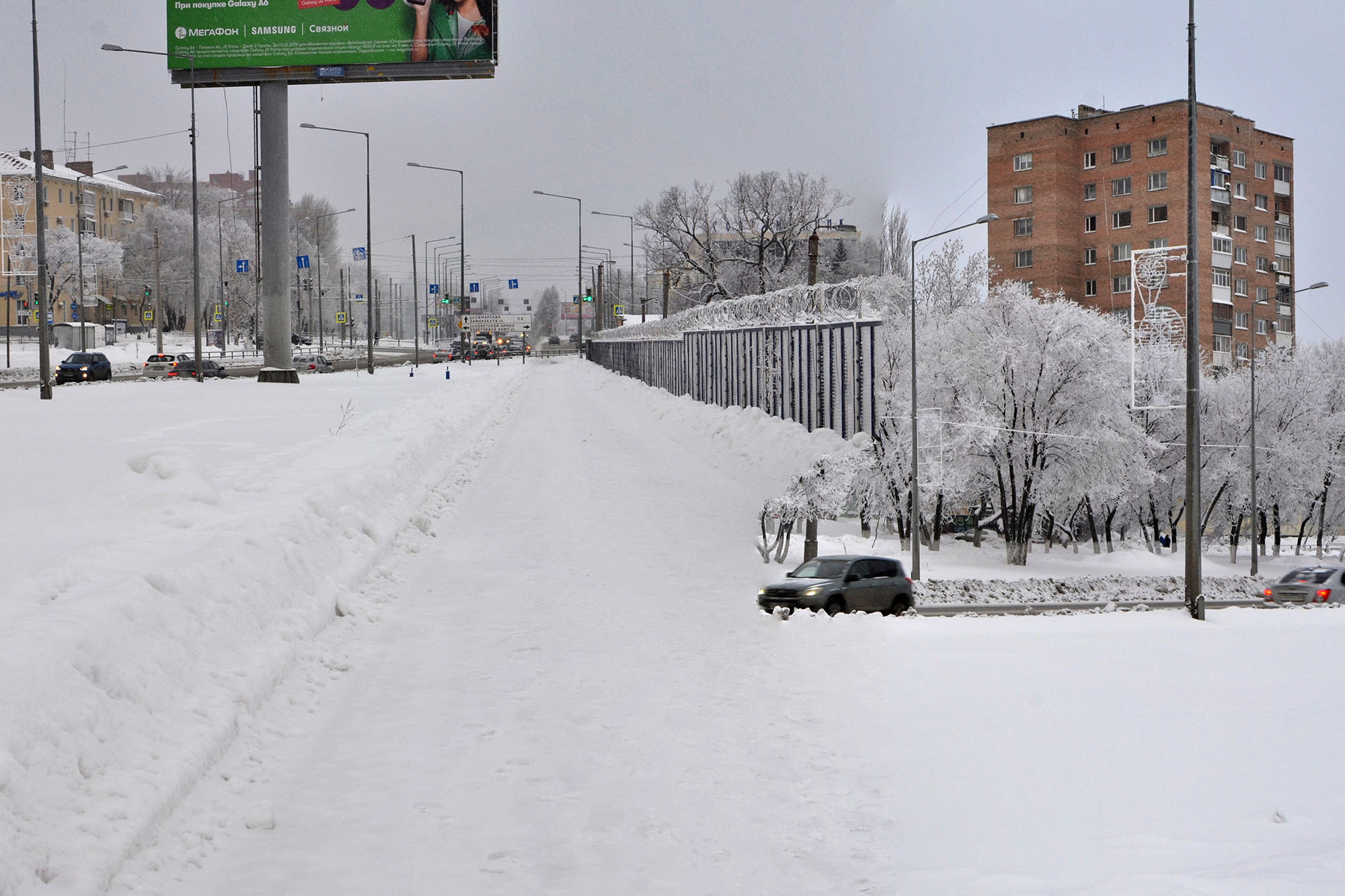
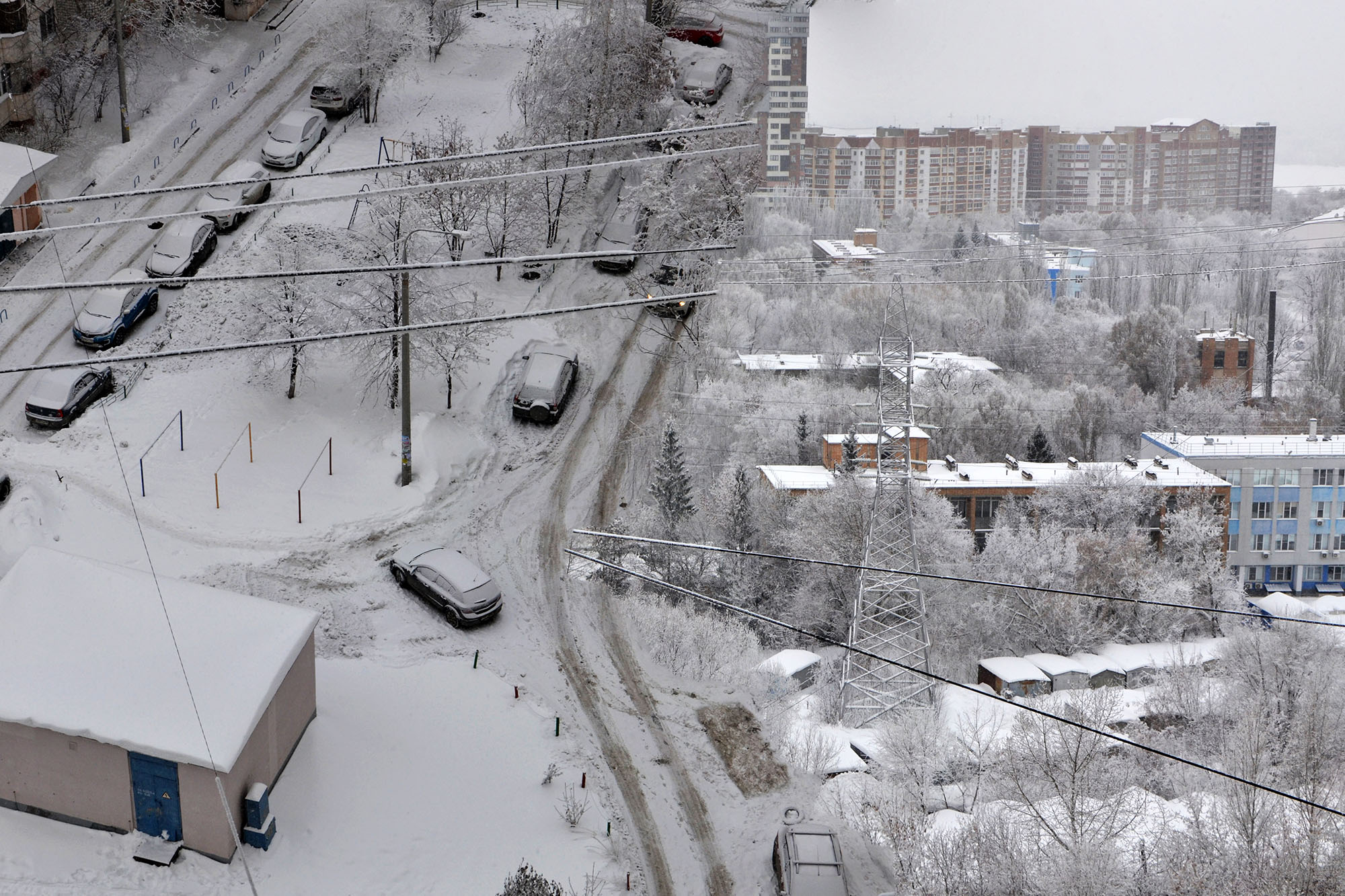

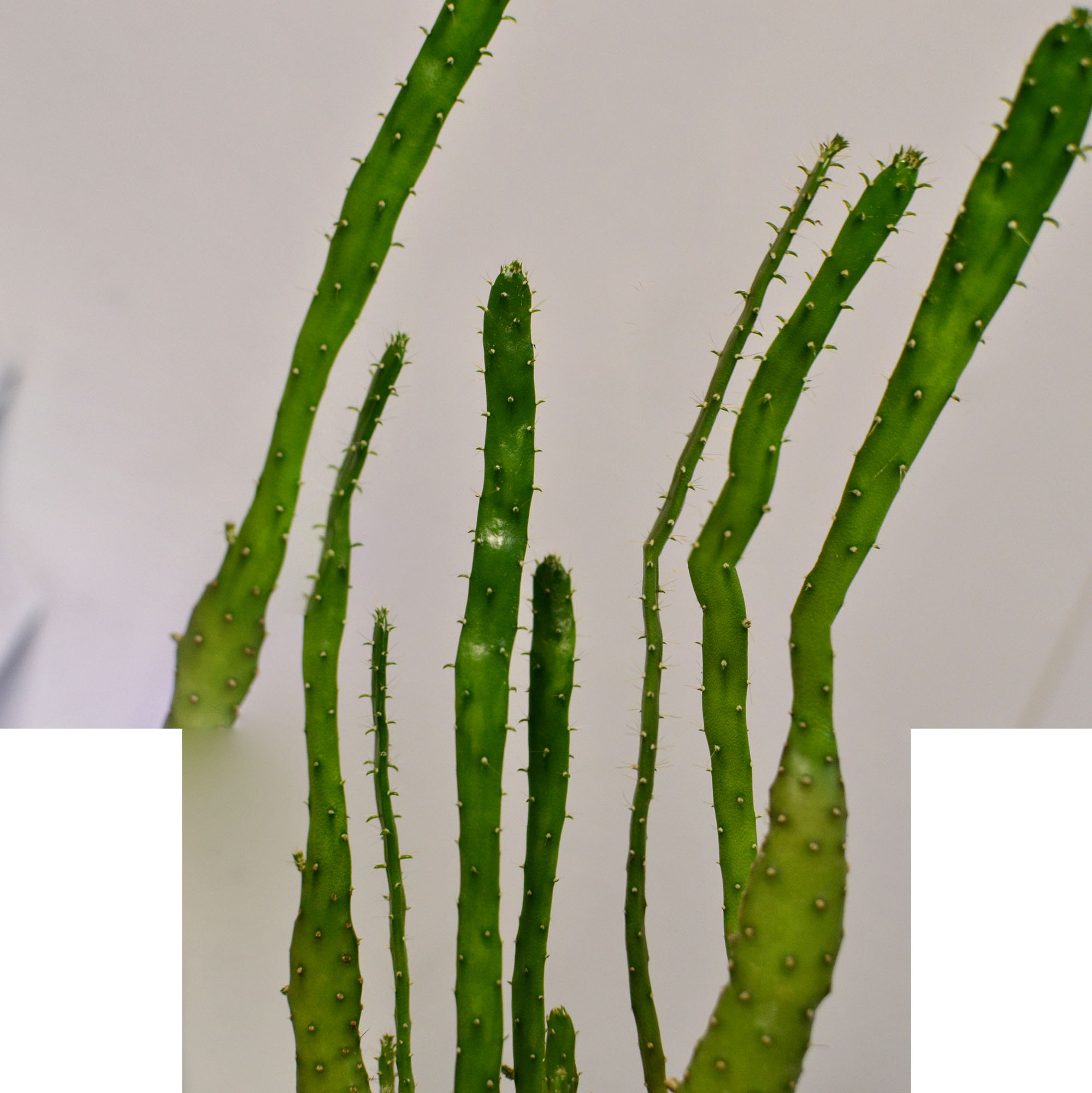
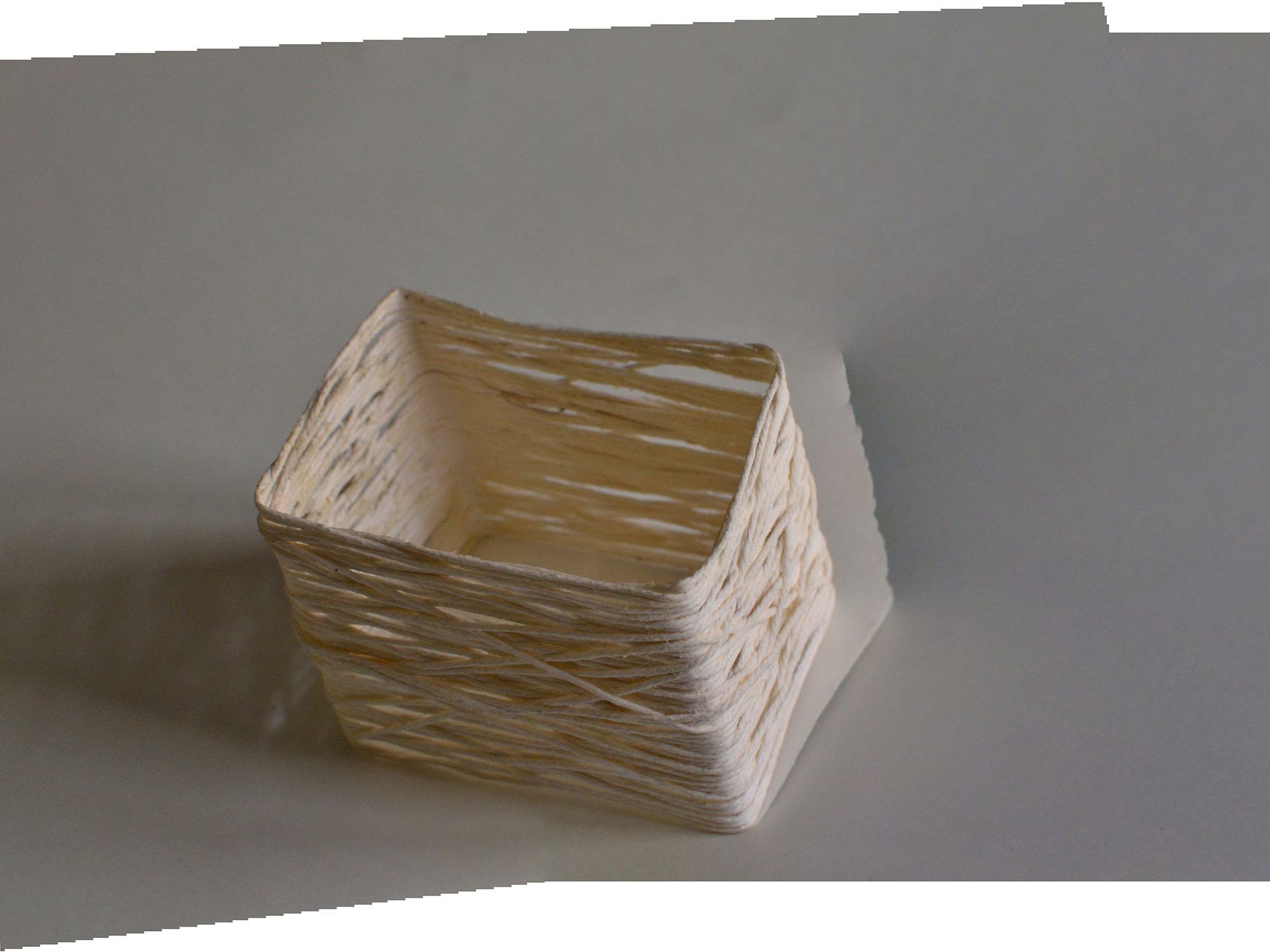

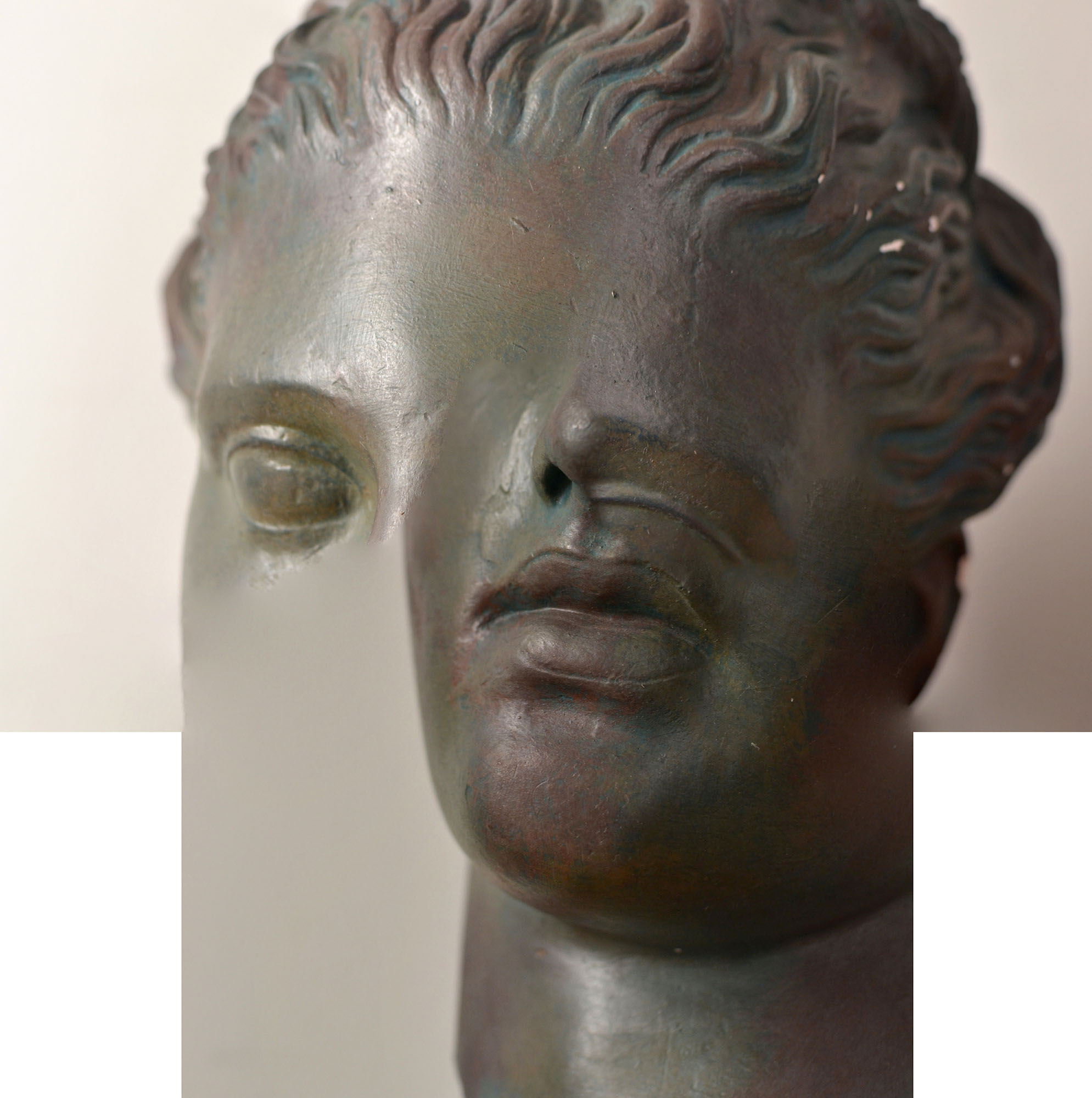
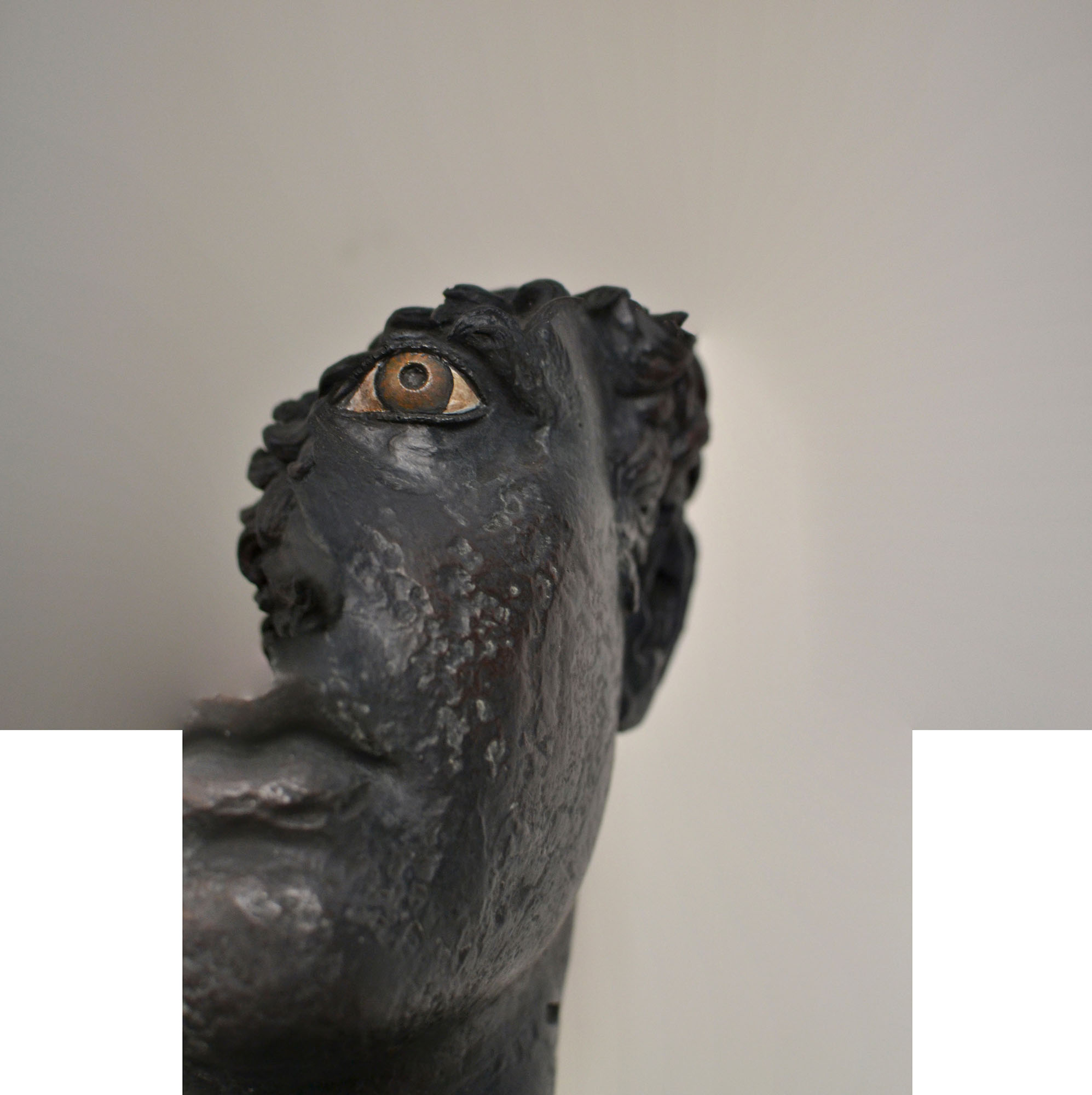

As Burckhard asserts, it is impossible to generate an ugly image of landscape due to the fact it arises in the imagination of the viewer looking at it and not as a phenomenon of the environment¹. The thesis title refers to a Photo stitching automated process, during which, two or more images are properly synthesized to produce a panoramic image.
However, parallaxes and process errors present particular interest (Artifacts), specifically when images are not taken by the same place due to a quick or dynamic movement or due to time differences amongst the image parts, the so called Blind stitching. Contrary to a visual process, such as the traditional collage and montage methods, through a set of calculations and probabilistic methods, the information of images are mapped, aligned and synthesized.
This special aesthetic form, as a result and act, moves alongside with Roy Ascott’s Cyberception concept², as per which our post-biological technologies allow not only the creation of a basis for the development of higher state of consciousness – perception, but also to redefine the manner in which we can coexist in this intermediate dance, between the virtual and the real, seeking a new social environment.
Flaws in stapling and deformations are visually intense; however, it is still the result of an unpredictable computational process, which shapes narratives and topographies through filtering, exclusion and recombination as well. At the same time, the question arises whether this correlation between a computational and human behavior may become a starting point for the expansion of the image production capabilities as well as for a new critical reading of the relevant.
1. Fezer, J. & Schmitz, M. (2012). Lucius Burckhardt Writings. Rethinking Man-made Environments. Politics, Landscape and Design. Wien
2. Ascott, R. (2003). Telematic Embrace: Visionary Theories of Art, Technology and Consciousness. The Regents of the University of California